
A puddle near your indoor air handler, a wet spot on the ceiling below an attic unit, or water dripping from a window unit are all signs that something inside your cooling system is not draining the way it should. An air conditioner leaking water inside the house is rarely random, and figuring out which of a handful of common causes is behind it usually points straight to the fix. Here are the five most common reasons this happens and what each one means for your home.
1. A Clogged Condensate Drain Line
This is by far the most common cause of an AC leaking water inside a house. As your air conditioner cools the air, it pulls moisture out of it, and that water is supposed to travel through a condensate drain line and out of the house. Over a full cooling season, algae, dust, and debris build up inside that line and eventually block it completely.
Once the line is blocked, condensate has nowhere to go but back up and out of the drain pan, which is exactly when homeowners start noticing water where it should not be. A clear line is a simple fix, but a line that clogs repeatedly usually means it needs a deeper cleaning or a properly installed vent to keep it flowing.
2. A Full or Overflowing Drain Pan
Every central air system has a drain pan positioned under the evaporator coil to catch condensate before it reaches the drain line. If that pan cracks, rusts through, or simply overflows because the drain line is not keeping up, water spills out and often ends up on the floor or ceiling below.
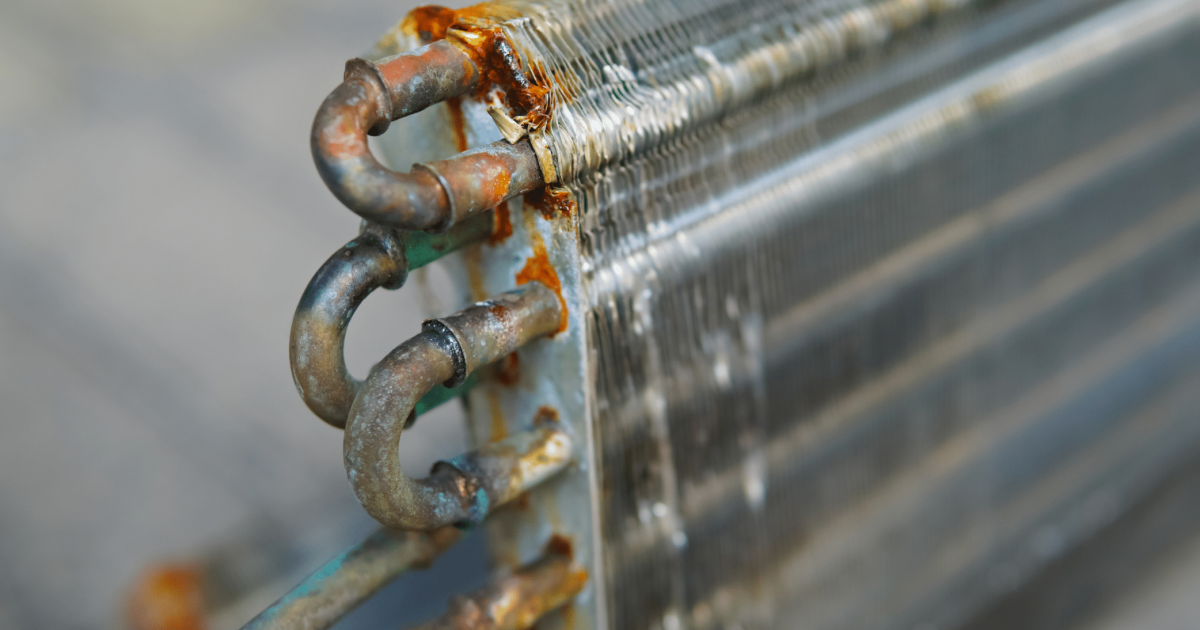
An older drain pan, especially one made of galvanized metal instead of plastic, is more likely to corrode over time. If your system is more than a decade old, a failing drain pan is worth ruling out early.
3. A Frozen Evaporator Coil That Is Melting
When airflow across the evaporator coil is restricted, whether from a dirty air filter, blocked vents, or low refrigerant, the coil can drop below freezing and ice over. That ice does not stay frozen forever. Once the system cycles off or airflow improves even slightly, all of that built-up ice melts at once, and the drain pan and line are often not built to handle that sudden volume.
A frozen coil is also a sign your system is struggling to cool your home properly, so the water leak is often paired with weak airflow or a home that feels warmer than it should.
4. Improper Installation or a Disconnected Line
Not every leak traces back to age or buildup. Sometimes a condensate line was never sloped correctly, was left loosely connected, or was routed in a way that lets gravity work against it instead of for it. This is more common after a DIY repair or an installation that was rushed.
If your system is newer and already leaking, installation is one of the first things worth checking, since a properly pitched and secured line should not need attention for years.
5. High Humidity Overwhelming the System
Central New York summers bring plenty of humid stretches, and an air conditioner that is undersized, aging, or simply working overtime during a humid spell can produce more condensate than its drain system was designed to handle. The U.S. Department of Energy notes that routine maintenance, including keeping coils and drain lines clear, is one of the most effective ways to keep a central air system running efficiently during heavy use. This is also where a similar issue shows up with high-efficiency furnaces, which produce their own condensate year round and can leak in summer if that separate drain line clogs at the same time your AC is running hard.
If your system has been leaking on top of other performance issues, our post on troubleshooting an AC that can’t keep up with NY humidity covers additional causes worth ruling out.
Preventing Water Damage From Your AC
A leaking air conditioner is not just an inconvenience. Left unaddressed, it can damage flooring, drywall, and ceilings, and create the kind of moisture problem that leads to mold. The U.S. Environmental Protection Agency points to unresolved moisture as one of the leading causes of indoor mold growth, which is exactly why a small AC leak is worth addressing quickly rather than waiting it out. Turning the system off and calling for service as soon as you notice a leak is the safest first step, since running a system with a blocked or damaged drain path usually makes the water problem worse.
Routine AC maintenance catches a clogged drain line or an aging drain pan before either one turns into a leak, which is one of the simplest ways to avoid this problem altogether. If your air conditioner is already leaking, our technicians at Hummingbird Heating, Cooling, Plumbing & Electric can track down the exact cause, whether that means clearing a line, replacing a pan, or diagnosing an airflow issue behind a frozen coil. Schedule AC repair with our team, or contact us to get on the schedule before a small leak becomes a bigger repair.
FAQs About AC Leaking Water
How do I stop my AC unit from leaking water inside?
Start by turning off the system so you are not pushing more condensate through a blocked or damaged path. Check the air filter, since a dirty filter is a common trigger for the frozen coil that leads to leaks once it thaws. If the leak continues or you cannot find an obvious cause, a technician can clear the drain line, inspect the pan, and check refrigerant levels.
Should I turn off my AC if it’s leaking water?
Yes, turning the system off is the safest first step once you notice water where it should not be. Continuing to run the system can add more water damage and, in some cases, cause a frozen coil to thaw and release even more water at once. Shutting it down until the cause is identified limits the damage while you wait for service.
Is an AC leak an emergency?
An AC leak is not usually a life-safety emergency, but it should be treated with urgency because of the water damage it can cause to floors, ceilings, and drywall. The longer a leak continues, the more likely it is to lead to mold growth or structural damage. Scheduling service quickly, rather than waiting to see if it resolves on its own, is the safer approach.
